

Understanding the Cassava Value Chain: Opportunities, Challenges, and Pathways for Growth
Introduction
Cassava (Manihot esculenta) is one of Africa’s most important food security crops, serving as a vital source of calories for over 500 million people worldwide. In Nigeria—the largest producer of cassava globally—the crop plays a strategic role in household food security, rural livelihoods, and industrial development. However, beyond being a staple food, cassava has evolved into a key raw material for several agro-industrial products, ranging from starch, ethanol, and animal feed to high-quality cassava flour and confectioneries.
The cassava value chain encompasses all the processes, actors, and linkages involved in moving cassava from the farm to the final consumer. Understanding this chain is crucial for harnessing the crop’s full potential for economic empowerment, job creation, and poverty reduction.
1. Overview of the Cassava Value Chain
The cassava value chain is divided into four main segments:
- Input Supply
- Production
- Processing
- Marketing and Distribution
Each stage involves specific actors, technologies, and support services that determine the efficiency and profitability of the entire chain.
2. Input Supply
This stage provides the essential materials and services required for cassava cultivation. It includes:
- Improved Cassava Varieties: High-yielding, disease-resistant, and biofortified varieties such as Vitamin A cassava.
- Fertilizers and Agrochemicals: To improve soil fertility and control pests and diseases like cassava mosaic and bacterial blight.
- Farm Equipment: Mechanized tools for land preparation, planting, and harvesting.
- Extension Services and Credit Facilities: Provided by agricultural agencies, cooperatives, and NGOs to enhance farmer productivity.
- Key Actors: Seed companies, input dealers, research institutions (e.g., IITA, NRCRI), and agricultural extension workers.
3. Cassava Production
Cassava production in Nigeria is largely dominated by smallholder farmers cultivating between 1–5 hectares. The crop thrives in a wide range of soil types and climatic conditions, making it a resilient option for rural farmers. However, productivity remains low compared to potential yields due to limited mechanization, poor access to quality planting materials, and inadequate post-harvest management.
Opportunities:
- Mechanization of land preparation and harvesting.
- Formation of cooperatives for input access and bulk sales
- Promotion of climate-smart agricultural practices.
4. Processing and Value Addition
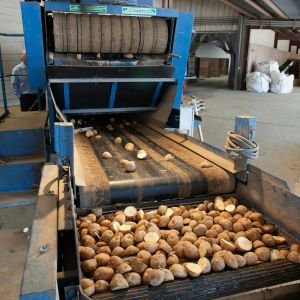
Processing is a critical link in the cassava value chain, transforming bulky, perishable roots into high-value products with extended shelf life and industrial relevance.
Major Cassava Derivatives Include:
- Garri: The most popular traditional product consumed across Nigeria and West Africa.
- Fufu/Akpu: Fermented wet paste used in local diets.
- High-Quality Cassava Flour (HQCF): Used in baking, confectioneries, and partial substitution for wheat flour.
- Cassava Chips and Pellets: Raw material for animal feed and export.
- Industrial Starch: Used in pharmaceuticals, paper, and textile industries.
- Ethanol: For biofuel and beverages.
- Odourless Fufu, Cassava Bread, and Snacks: Emerging products from SMEs and food innovators.
Processing Challenges:
- Limited access to processing equipment and technologies.
- Inconsistent power supply and water access.
- Weak market linkages between farmers and processors.
Opportunities:
- Establishment of community processing centers.
- Private investments in medium and large-scale processing plants.
- Promotion of women-led microenterprises in value-added cassava products.
5. Marketing and Distribution
Cassava products are marketed through both formal and informal channels. Traditional markets handle products like garri and fufu, while industrial buyers procure cassava starch, chips, and ethanol.
Key Actors:
- Farmers and aggregators
- Wholesalers and retailers
- Processors and exporters
- Transporters and logistics companies
Marketing Challenges:
- Price volatility due to seasonal glut and perishability.
- Poor market infrastructure and transportation networks.
- Lack of standardization and quality assurance in product packaging.
Conclusion and Recommendations
Cassava is not just a food crop—it is an industrial and economic commodity capable of transforming Nigeria’s agricultural landscape. To unlock its full potential, stakeholders must:
- Strengthen linkages among value chain actors.
- Encourage investment in mechanization and processing infrastructure.
- Enhance access to improved varieties and input financing.
- Promote market-driven research and innovation.
- Implement inclusive policies that support women and youth participation.
By addressing bottlenecks and investing strategically, Nigeria and other cassava-producing nations can build resilient cassava value chains that drive sustainable growth, reduce poverty, and ensure food and nutrition security.
0 comments